
Elopement Photography Packages: What to Actually Look For in 2026
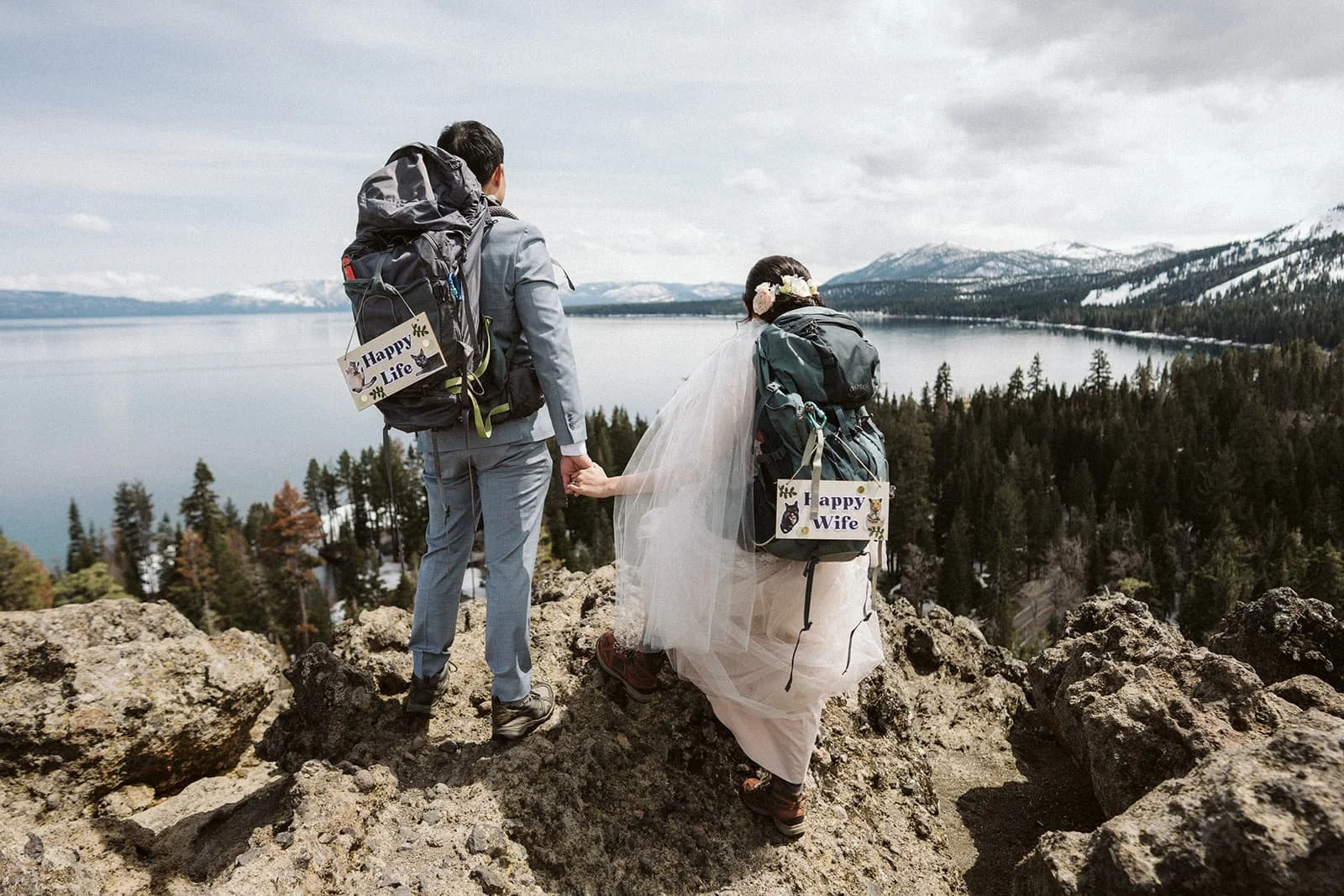
Most couples who elope tell me the same thing during our first conversation. They didn't want a smaller wedding. They wanted a real one. No seating chart, no timeline built around a reception, no audience. Just the two of them, the vows, and whatever the day happened to feel like.
That's the whole reason to elope. So the photography should work the same way.
An elopement photography package isn't just a person with a camera for a few hours. Done right, it's someone who handles the permits, the timeline, and the parts of the day you've never had to plan before — so the only thing left for you to do is show up and get married. This guide walks through what that actually looks like, and what to ask for before you book anyone.
Why the Whole Day Matters, Not Just the Ceremony
A lot of couples start out looking for a two-hour ceremony session. I understand the instinct — it feels like the ceremony is the only part that needs documenting. But a rushed window turns your wedding day into a photoshoot instead of a day you actually got to live.
I shoot full days for a reason. The quiet coffee before you get dressed. The hike out to wherever you chose to say your vows. The look on your face somewhere in the middle of the day when nobody's watching and you forget I'm there. Those are the frames people go back to years later — not the posed ones.
A full day also gives the day room to breathe. Weather shifts. Trails take longer than expected. Light changes fast at elevation. If your coverage is boxed into two hours, none of that room exists. If it's a full day, it barely matters.
What Should Actually Be Included
Here's what I think belongs in any real elopement photography and planning offer:
Film, digital, and video, together. Digital does the heavy lifting — sharp, reliable, built for low light. Film does something digital can't. It slows the day down, because there's no screen to check between frames, and the result has a depth to it that feels closer to how the day actually felt than how it looked. Video adds the layer neither can — the sound of your vows, the wind, the pause before you say "I do." I shoot all three because your day deserves more than one way of being remembered.
Full planning, not an add-on. Permits. Timeline. Vendor coordination if you need it. This is the part most photographers leave out, and it's the part that actually determines whether your day feels easy or stressful. If your photographer isn't handling this, you're handling it — on top of everything else you're already juggling.
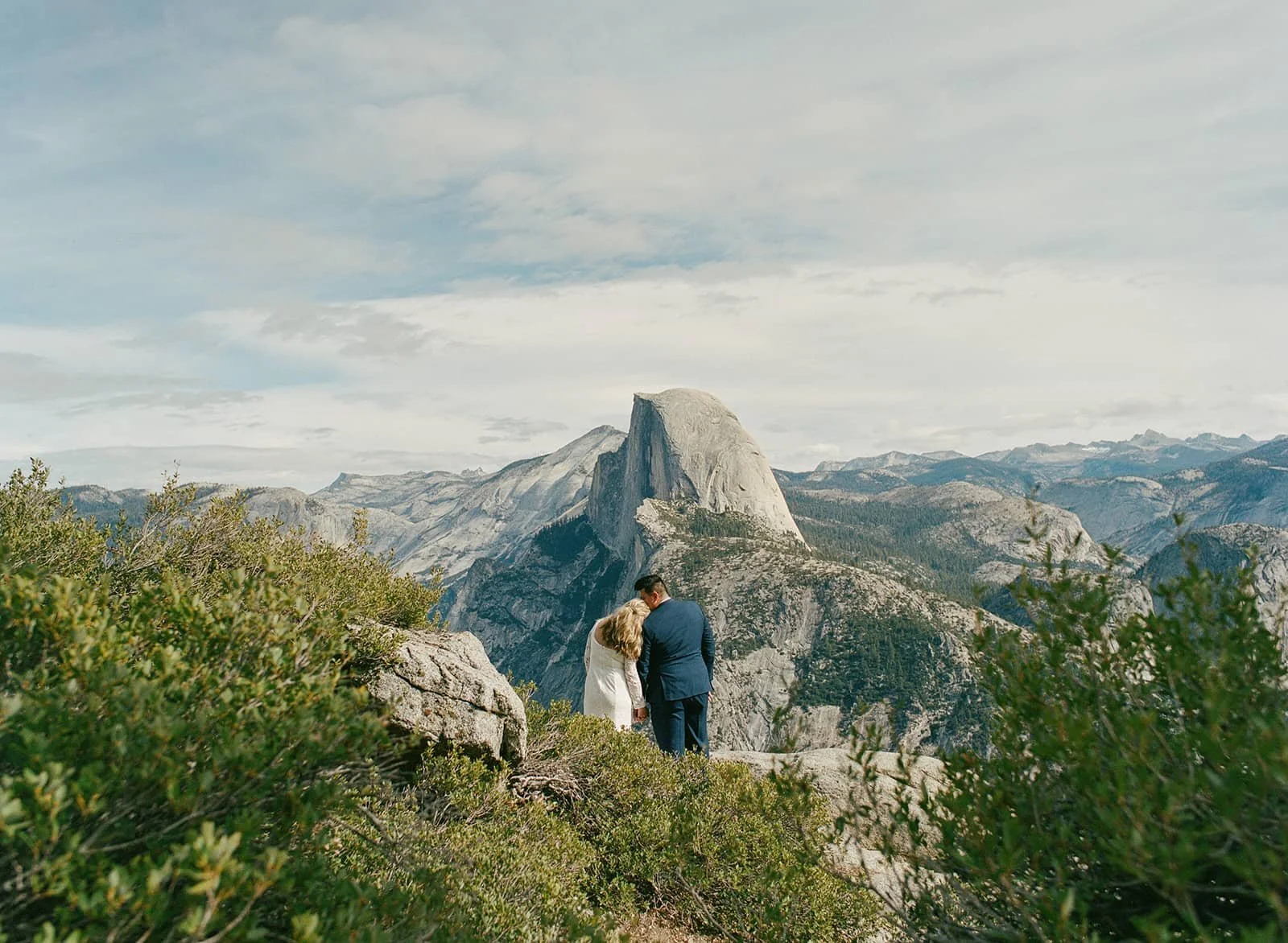
A timeline built around light, not a schedule. I don't build your day around a reception start time, because there isn't one. I build it around sunrise, sunset, and how the light moves across whatever landscape you've chosen. Golden hour at Lake Tahoe and golden hour at Glacier Point in Yosemite are two completely different things, and the plan should reflect that.
Real prints and real files. You should walk away with high-resolution images and the rights to print them, not a locked-down gallery you have to pay extra to access.
Why I Shoot Film and Digital Together
Digital is precise. It handles low light, fast movement, anything unpredictable — which matters when you're eloping somewhere remote and the light is doing whatever it wants.
Film is different. There's no instant preview, so I have to be deliberate with every frame, and that changes the pace of the whole day. It also changes how the image feels once it's back — the grain, the color, the way it ages. It doesn't just show what the day looked like. It holds onto how it felt to be there.
I use both because I don't think you should have to choose between technical coverage and something that feels timeless. You get both in the same gallery.
Video, Without the Crew
A lot of couples hesitate on adding video because they picture a production — lights, a boom mic, someone directing you where to stand. That's not how I work. I shoot with small, unobtrusive gear, and I stay out of the way the same way I do with a camera. The goal isn't a highlight reel. It's the sound of your voice catching during your vows, the wind through the trees, the parts of the day that a still photo can't hold. If I'm doing it right, you forget I'm filming at all.
The Part Most Photographers Skip: Permits and Planning
This is where I think most couples get let down, and it's the part I care about most.
Lake Tahoe and Yosemite are both places where you can't just show up and get married wherever you'd like. Yosemite requires a wedding permit through the National Park Service, and depending on where in the park you're hoping to marry, there can be restrictions on group size, location, and timing. Lake Tahoe spans multiple jurisdictions — U.S. Forest Service land, state parks, and private property all have different rules. None of this is meant to scare you off. It's meant to explain why I handle it directly instead of leaving it to you.
I submit the applications. I track the deadlines. I know which spots require a permit and which don't, and I know the backup locations if a permit falls through or a trail closes. You don't need to learn any of this. That's the job.
If you're planning from out of state and have never set foot in Tahoe or Yosemite, this matters even more. I've walked this process enough times that I already know where the friction points are before they happen.
Building a Timeline That Actually Protects You
A good timeline isn't rigid. It's a framework with enough room built into it that nothing feels rushed.
I plan around the sun, not the clock. If we find a spot along the way that feels right, we stay in it. If weather shifts the plan, I already have a version of Plan B ready, because I built one before we ever left the trailhead. The goal is that you never feel like you're being moved through a schedule. You're just having a day, and I'm quietly making sure it holds together.
How to Choose the Right Photographer for This
Portfolio matters, but it's not the only thing to look at. You're inviting this person into some of the most unguarded hours of your life. The fit matters as much as the work.
In your first conversation, notice what they talk about. Do they talk about gear and shot lists, or do they ask how you want the day to feel? Tell them plainly if you want something quiet and unscripted — that you're not looking for posed portraits or a produced-feeling day. A good fit will already understand that instinct, because it's how they work anyway.
When to Book
Book earlier than feels necessary — six to twelve months out if you can, especially for Yosemite, where permit windows can be limited and some dates fill early. Booking early doesn't just secure your date. It gives enough time to file the right paperwork and build a real backup plan, instead of scrambling one together the week of.
A Day That's Actually Yours
Eloping was never about doing a smaller version of a traditional wedding. It was about removing everything that wasn't the two of you. The photography and planning around your day should hold to that same idea — no performance, no production, nothing standing between you and the day you're actually having.
I handle the permits. I build the timeline. I shoot film, digital, and video so nothing about the day goes undocumented. You just have to show up and get married.
If that's the kind of day you're picturing, let's plan your elopement.
Frequently Asked Questions
What's included in an elopement photography package? A real package includes more than photography hours. Expect full-day digital and film coverage, permit handling, a custom timeline, and often video — all built around your specific location, not a generic template.
Do we need a permit to elope in Lake Tahoe or Yosemite? Yes, in most cases. Yosemite requires a wedding permit through the National Park Service, and Lake Tahoe locations fall under several different jurisdictions depending on where you choose. I handle this directly as part of planning your day.
How many hours of coverage do we actually need? Most couples are happiest with full-day coverage — generally 6 to 10 hours. A two-hour window can cover a ceremony, but it tends to feel rushed and leaves out the parts of the day that usually mean the most later.
Is video worth adding? If you want the sound of your vows and the movement of the day preserved, yes. I shoot with small, unobtrusive gear specifically so it never feels like a production.
Can we bring our dog? Often, yes — though it depends on the location. Some trails and areas in Yosemite have restrictions. I help you check this during planning so there are no surprises on the day.
What if the weather doesn't cooperate? I always build a backup plan alongside the primary one. Weather at elevation shifts quickly, and I'd rather have a real Plan B ready than hope the sky cooperates.
How far in advance should we book? Six to twelve months out is ideal, especially for Yosemite, where permit timelines and date availability can be tighter than people expect.
