
The Best Time to Elope in Yosemite
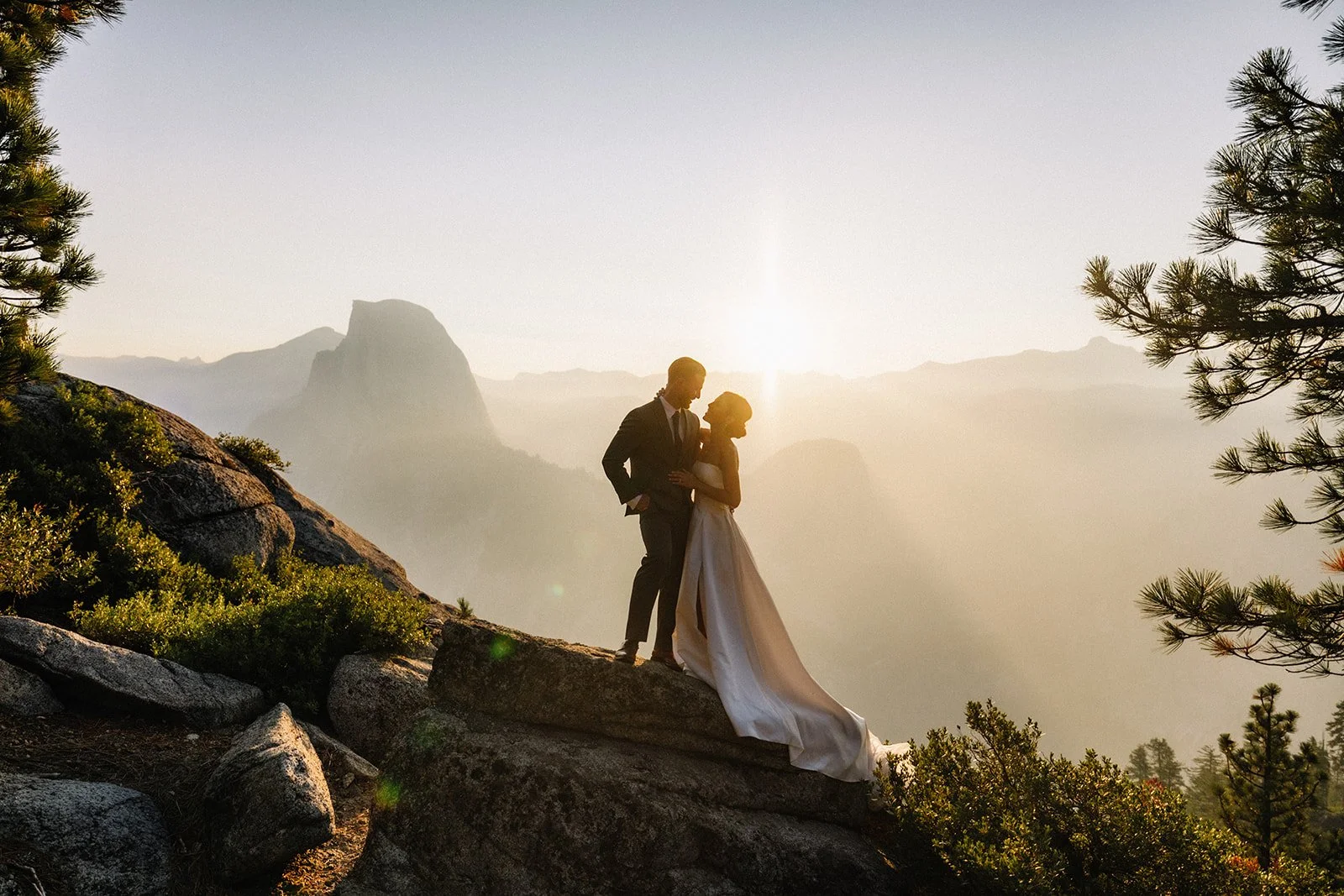
A season-by-season planning guide
One of the first questions every couple asks is when they should elope in Yosemite.
The answer surprises people. There isn't one.
There's no ideal month, no weekend better than every other weekend, no season that works for everyone. Every season gives you a different version of the park.
Spring is rushing water and green meadows. Summer opens the high country — Glacier Point, Tenaya Lake, Tuolumne Meadows. Fall brings crisp mornings, warm afternoons, and fewer visitors once school starts. Winter turns the Valley quiet, with snow across the granite and a pace unlike any other time of year.
None of them is better. They're different.
So I don't ask couples when they want to get married. I ask what kind of day they want to have. Once you know that, the season chooses itself.
Yosemite through the year
The biggest misconception about Yosemite is that it looks the same year-round.
It doesn't. It's closer to four different parks depending on when you arrive.
A waterfall roaring in May can be a trickle by September. A road open in July may be under snow in March. A crowded overlook in August can feel empty on a Tuesday in October.
The landscape changes. The light changes. The pace changes. Your timeline changes with them.
That's why the season should come before the ceremony location.
Spring · March to May
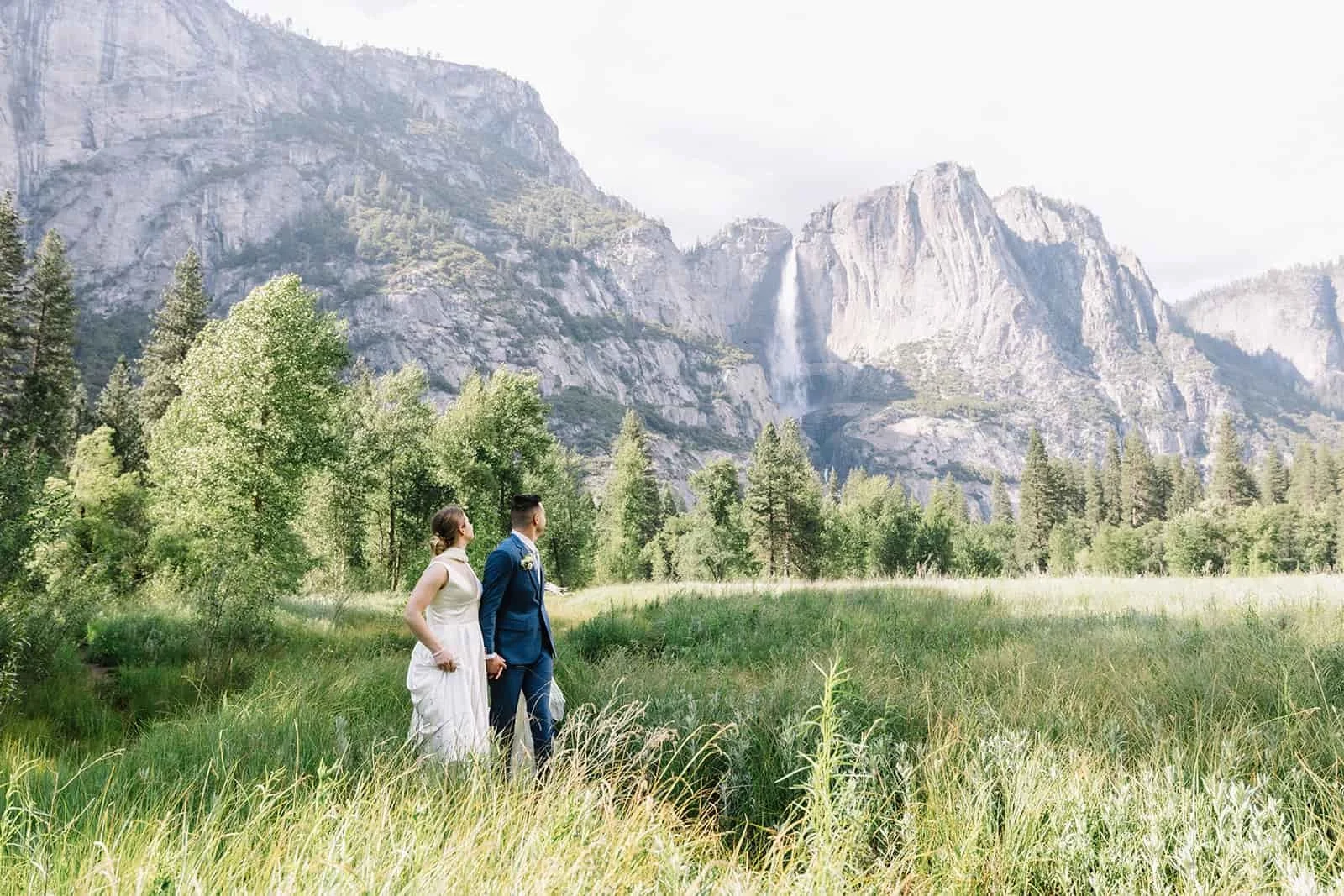
If Yosemite has a season that feels alive, this is it. Snow melts in the high Sierra, water pours over cliffs that were nearly dry a few months earlier, dogwoods bloom through the Valley, and green replaces winter's muted colors.
Why couples choose it. The waterfalls are at their peak. Bridalveil is louder. Yosemite Falls is impossible to ignore. Everywhere you go there's moving water, and that sound becomes part of your day. The greens are vivid in a way they won't be later in the year.
What to weigh. Spring weather doesn't hold still — one afternoon feels like summer and the next morning brings snow. Higher roads often stay closed, which means Glacier Point and Tioga Road may not be reachable yet. Flexibility is part of planning a spring date.
Best for: waterfalls, green landscapes, mild temperatures, Valley ceremonies, riverside locations.
Choose another season if you have your heart set on Glacier Point, Tenaya Lake, or Tuolumne Meadows. Those typically aren't open until later.
Crowds: ★★★★☆ — spring break and weekends get busy, weekdays stay quiet. Weather: cool mornings, comfortable afternoons, possible rain, occasional late snow.
Summer · June to August
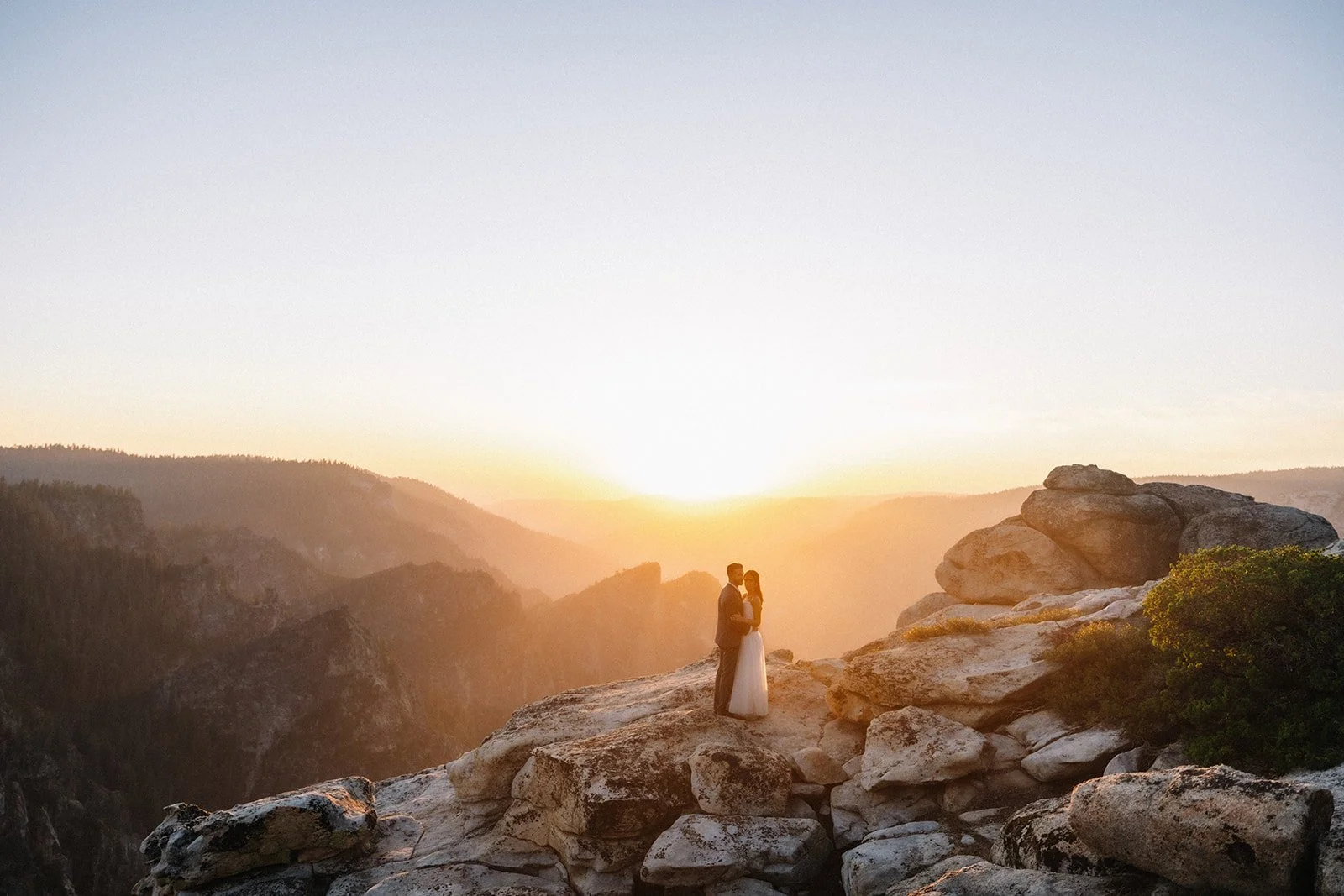
Summer is when the park opens up. Roads clear, trails become reachable, and the high country comes alive. If you've seen photographs from Glacier Point, Taft Point, or Tenaya Lake, they were probably taken now.
Why couples choose it. More options than any other season. Nearly every ceremony location is accessible, and you can build a day that moves between the Valley and the high country. Sunrise comes early and sunset comes late, so the day never feels compressed.
What to weigh. It's also the busiest stretch of the year. Parking fills fast and popular overlooks stay occupied all day. Small adjustments change everything — a weekday instead of a Saturday, or a sunrise start instead of an afternoon one.
Best for: Glacier Point, Taft Point, Tenaya Lake, Tuolumne Meadows, full-day plans.
Crowds: ★★★★★ — the busiest season. Weather: warm days, cool mornings, comfortable evenings, minimal rain.
AJ's note. Summer doesn't have to mean crowds. Some of the quietest Yosemite elopements I've photographed happened on summer mornings before most visitors had finished breakfast.
Fall · September to November
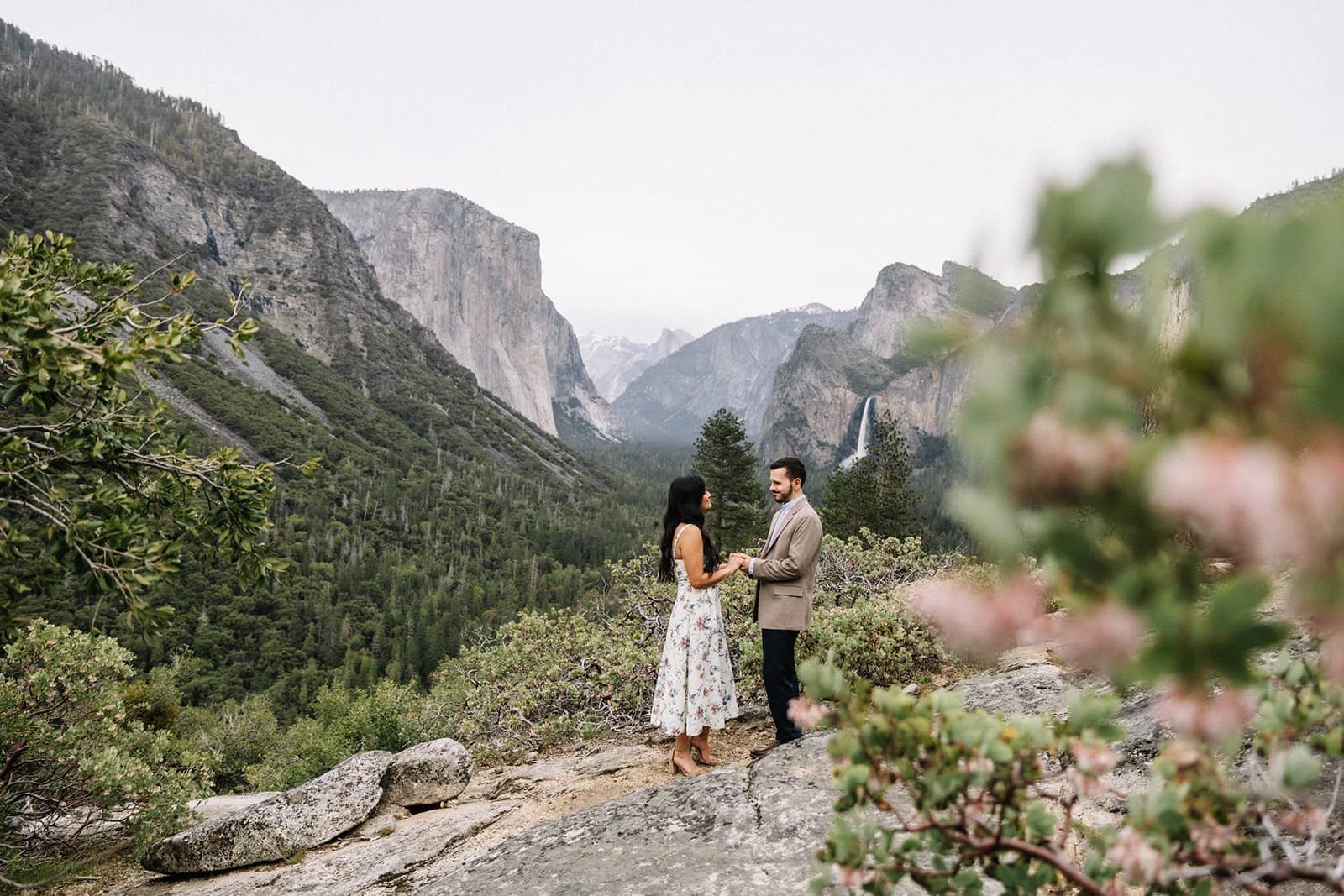
If you asked which season I recommend most, it would be this one. Not because it's the most dramatic — because it's the best balance.
Summer crowds fade. Temperatures get comfortable. The light softens. The pace of the whole park changes. Instead of Yosemite trying to impress you, it feels like it's asking you to slow down.
What fall actually feels like. There's something specific about a Yosemite morning in October. The air is crisp enough for a light jacket. The sun rises later, so sunrise portraits don't require a middle-of-the-night alarm. The Valley is quieter. The drive through the park feels slower, not because of traffic but because you're noticing more.
The light is the real reason. Summer sun is bright and overhead. In fall it stays lower all day — softer, warmer, more directional. Granite takes on warmer tones and the forests get richer. You don't need dramatic weather for good photographs. Sometimes you just need good light.
What to weigh. Waterfalls change through the fall. Some keep flowing well; others shrink considerably. If you're picturing water at full strength, spring is the better bet. Weather also gets less predictable as the season goes on, and Tioga Road's closing date varies year to year.
Best for: comfortable temperatures, unhurried timelines, sunrise ceremonies, evening light, couples who want fewer people around.
Crowds: ★★★☆☆ Weather: cool mornings, pleasant afternoons, cool evenings, occasional storms later on.
AJ's note. If you asked me when I'd choose to spend a whole day wandering Yosemite with no schedule, I'd say October. There's a quality to the Valley then that's difficult to describe until you've been there for it.
Winter · December to February
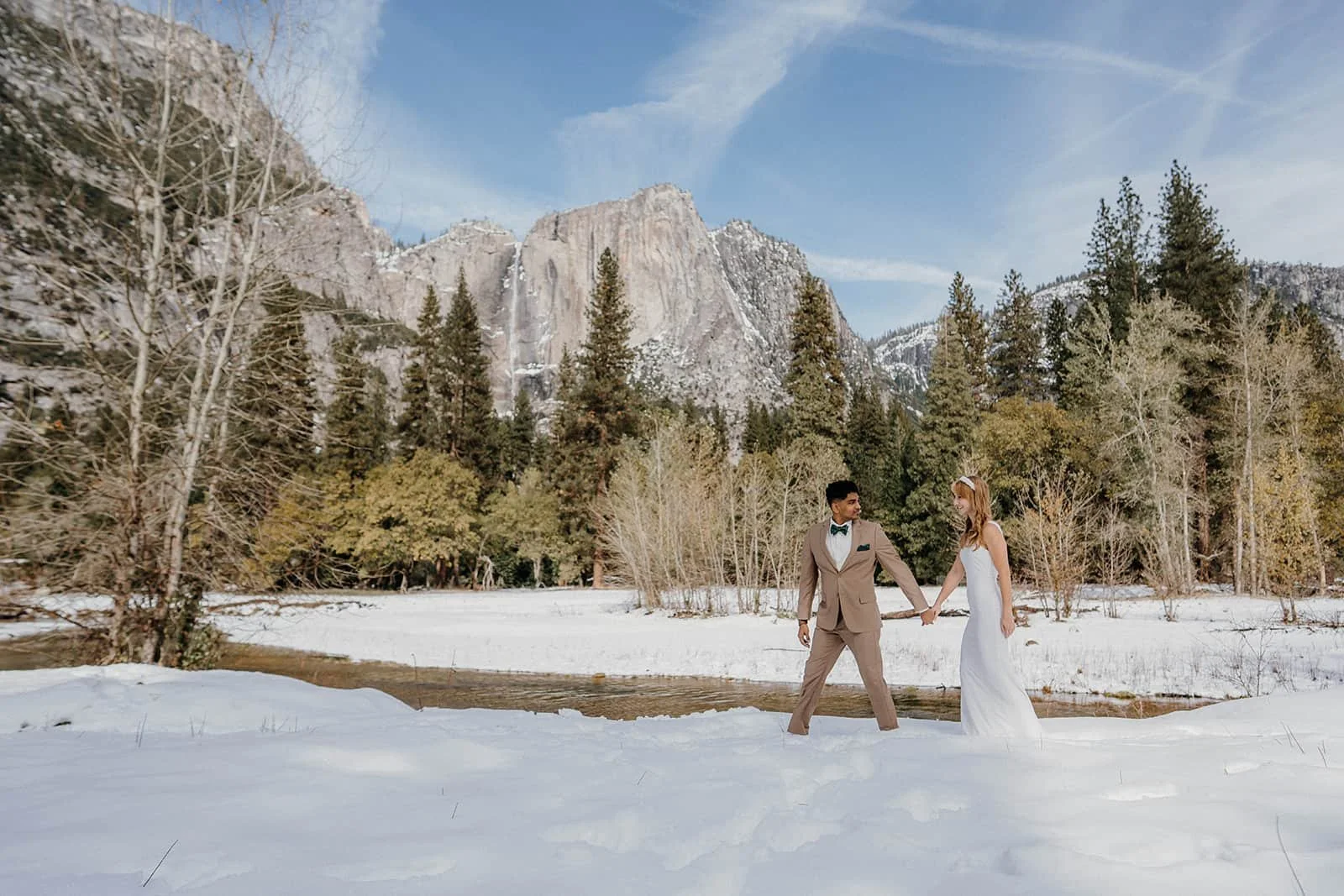
Most people cross winter off immediately. They assume everything is closed, too cold, too uncertain.
The reality is more interesting. Snow settles across the Valley floor, the granite gets dusted white, and the air goes completely still. Mornings are quieter than any other time of year.
What it's actually like. You arrive before sunrise. Fresh snow across the meadow, your footsteps the first tracks on the trail. The only sounds are your boots and the Merced running nearby. Half Dome comes up through the mist. The Valley is nearly empty.
Winter doesn't make Yosemite smaller. It makes it feel like yours.
Why couples choose it. Quiet, mostly. Fewer visitors, no pressure to see everything, and the day naturally becomes about the two of you rather than a list of overlooks. Couples linger over breakfast, walk slowly through snowy meadows, hold warm drinks between portraits.
What to weigh. Storms can close roads temporarily. Glacier Point Road and Tioga Road stay closed all season. Temperatures shift quickly, and warm clothing becomes part of the plan. The Valley itself stays open and reachable throughout.
Best for: small ceremonies, snow, quiet, couples who want the park nearly to themselves.
Choose another season if your heart is set on Glacier Point, Taft Point, Tenaya Lake, or Tuolumne Meadows. Most of those aren't reachable in winter.
Crowds: ★★☆☆☆ — the quietest season. Weather: cold mornings, possible snow, short daylight, changing road conditions.
Month by month
Seasons give you the shape. Months give you the detail.
January — the quietest month of the year, with fresh snow across the Valley and very few visitors. Higher roads are closed and chains may be required. Sunrise comes late, which makes early ceremonies easy. Best locations: Cathedral Beach, Sentinel Beach, Valley View, Tunnel View.
February — Horsetail Fall's firefall draws visitors from around the world during a short window, and the area near it gets packed. Outside that stretch, February stays calm and snowy.
March — the park waking up. Snow melts, streams get louder, and the weather can't decide what season it is. Crowds are still low and the waterfalls are building.
April — waterfalls roar, dogwoods bloom, the Valley turns green. Rain is possible and higher roads are still closed. One of the strongest months of the year for spring scenery.
May — waterfalls at or near peak, comfortable temperatures, wildflowers starting. Holiday weekends get busy; weekdays don't.
June — the high country starts opening. Glacier Point and Taft Point become reachable, the days are long, mornings stay cool. Access without midsummer's crowds.
July — warm weather and the longest daylight of the year, which gives a full-day plan room to breathe. Also the most visitors. Early mornings matter more this month than any other.
August — similar to July, with one difference: waterfalls are much smaller by late summer. The scenery holds up; the water doesn't.
September — crowds ease, temperatures settle, the light softens. One of my favorite months.
October — probably the month I recommend most. Comfortable temperatures, good light, smaller crowds, unhurried pace. Nearly every ceremony location works.
November — quiet, and transitioning toward winter. Fewer visitors, less predictable weather. You might get sun. You might get snow.
December — snow arrives, the Valley goes peaceful again, and the cabins nearby feel like the right place to be. Best for small ceremonies and winter scenery.
Planning tools
You've seen what each season looks like. These are the practical numbers for putting a date on the calendar.
Yosemite at a glance
| Season | Weather | Crowds | Waterfalls | High country | Best for |
|---|---|---|---|---|---|
| Spring | Cool to mild | Moderate | ★★★★★ | Limited | Waterfalls, lush scenery, rivers |
| Summer | Warm | High | ★★★ | Open | Glacier Point, Taft Point, Tenaya Lake |
| Fall | Cool and comfortable | Moderate to low | ★★ | Usually open in early fall | Relaxed timelines, golden light |
| Winter | Cold | Low | ★★ | Closed | Snow, quiet ceremonies |
There isn't a winner here. Each season is a different version of the same park.
Average Weather by Season
| Season | Morning | Afternoon | Evening |
|---|---|---|---|
| Spring | 35–50°F | 55–75°F | 40–55°F |
| Summer | 45–60°F | 75–95°F | 55–70°F |
| Fall | 35–55°F | 60–80°F | 40–60°F |
| Winter | 20–40°F | 40–55°F | 20–35°F |
H3 — Sunrise and sunset by month
Your ceremony time is decided by the light, not the clock. These are mid-month times for Yosemite Valley, and they shift a few minutes either side depending on your exact date.
| Month | Sunrise | Sunset | Daylight |
|---|---|---|---|
| January | 7:12 AM | 5:03 PM | 9h 50m |
| February | 6:47 AM | 5:37 PM | 10h 49m |
| March | 7:09 AM | 7:05 PM | 11h 56m |
| April | 6:23 AM | 7:34 PM | 13h 10m |
| May | 5:48 AM | 8:01 PM | 14h 12m |
| June | 5:36 AM | 8:21 PM | 14h 45m |
| July | 5:48 AM | 8:19 PM | 14h 30m |
| August | 6:14 AM | 7:50 PM | 13h 36m |
| September | 6:40 AM | 7:05 PM | 12h 25m |
| October | 7:07 AM | 6:20 PM | 11h 13m |
| November | 6:38 AM | 4:46 PM | 10h 7m |
| December | 7:06 AM | 4:40 PM | 9h 33m |
Why this matters more than it sounds. Sunset moves nearly four hours between June and December. A sunset ceremony in June happens after dinner; in December it happens mid-afternoon. If you're travelling in, that changes your flights as much as your schedule.
Short days aren't a drawback. A December sunset at 4:40 means the best light arrives while you're still fresh rather than at the end of a long day.
One thing specific to the Valley: the cliffs are high enough that direct light leaves the valley floor well before the listed sunset. Glacier Point and Taft Point sit above the rim and hold light noticeably longer. If you want the last of the sun, that's an argument for the higher locations.
AJ's tip
Plan around the temperature at your ceremony rather than the afternoon high. A sunrise ceremony in October is a different experience from a two o'clock ceremony in July. An extra layer is almost never a mistake here.
Waterfall Calendar
One of the biggest reasons couples choose spring is the waterfalls.
Here's what they typically look like throughout the year.
| Month | Waterfall activity |
|---|---|
| January | Moderate, weather dependent |
| February | Moderate |
| March | Increasing |
| April | Very strong |
| May | Peak flow |
| June | Strong |
| July | Moderate |
| August | Lower flow |
| September | Low |
| October | Low |
| November | Weather dependent |
| December | Moderate |
If Yosemite Falls is part of why you're choosing Yosemite, plan around spring. If waterfalls aren't a priority, fall gives you a more relaxed day overall.
Road Access Guide
Couples sometimes fall for a location before checking whether it's open in their month. Checking early saves rethinking the whole plan later — it's one of the first things I look at when we start.
| Location | Typical access |
|---|---|
| Yosemite Valley | Open year-round |
| Glacier Point Road | Late spring through fall |
| Tioga Road | Late spring or early summer through fall |
| Tenaya Lake | Summer through early fall |
| Tuolumne Meadows | Summer through early fall |
Crowd Calendar
One thing worth holding onto: a busy park at 2:00 p.m. feels completely different from the same place at 6:30 a.m. Timing often matters more than the month.
| Month | Crowd level |
|---|---|
| January | ★★☆☆☆ |
| February | ★★☆☆☆ — busier near Horsetail Fall |
| March | ★★★☆☆ |
| April | ★★★★☆ |
| May | ★★★★☆ |
| June | ★★★★★ |
| July | ★★★★★ |
| August | ★★★★★ |
| September | ★★★★☆ |
| October | ★★★☆☆ |
| November | ★★★☆☆ |
| December | ★★☆☆☆ |
Best Month for Each Ceremony Location
Valley locations stay flexible year-round. High-country locations depend on the roads.
| Ceremony location | Best months |
|---|---|
| Glacier Point | June–October |
| Taft Point | June–October |
| Cathedral Beach | April–October |
| Sentinel Beach | April–October |
| Valley View | Year-round |
| Tunnel View | Year-round |
| Tenaya Lake | July–September |
| Tuolumne Meadows | July–September |
| Cook's Meadow | April–October |
Notice how Yosemite Valley locations offer the most flexibility throughout the year, while high-country locations depend on seasonal road access.
Choosing your date in five steps
1 · Start with the feeling. How do you want the day to feel — quiet, active, unhurried? Everything else follows from that.
2 · Name your one priority. Finish this sentence: if we could only have one thing, we'd choose… Waterfalls. Snow. Glacier Point. Privacy. Warm weather. Fall colour. Knowing your top priority narrows the calendar immediately.
3 · Think about who's coming. Just the two of you? Family? Children or grandparents? Guest count affects both your location and your timeline.
4 · Look at your actual schedule. Holiday travel, weekdays, how much time you can take. Practical constraints often make the decision easier rather than harder.
5 · Leave room. Mountain weather has a way of reminding you what you don't control. Some of the best days I've photographed weren't the ones that went to plan — they were the ones where the couple took what Yosemite gave them.
AJ's advice. Don't choose your date because it looks good on a calendar. Choose it because it supports the day you want. I've photographed good weddings in every season, and none of them were good because of the month. They were good because the couple picked a season that fit them.
Mistakes worth avoiding
Chasing ideal weather. It's natural to hope for blue skies. But this is a mountain environment and conditions change fast. I've watched cloudy forecasts turn into remarkable sunsets and brief showers clear right before a ceremony. I've also watched couples worry about the forecast for weeks, then realise on the day that it didn't matter. Plan for flexibility instead — an extra layer, a clear umbrella in the car, room in the timeline.
Planning around popular dates. Holiday weekends seem convenient and are among the busiest times here. Hotels book earlier, parking fills faster, viewpoints get crowded. A weekday changes the whole experience.
Dismissing sunrise. Waking before dawn doesn't sound appealing at first. But the park is different then — quieter roads, softer light, comfortable temperatures, and Yosemite before it fully wakes up. You don't have to choose sunrise. It's worth considering before defaulting to afternoon.
Booking before checking access. This matters most for Glacier Point, Taft Point, Tenaya Lake, and Tuolumne Meadows. All depend on seasonal road openings. Confirm your location is typically reachable in your month before you commit to a date.
Trying to control everything. Clouds move in. Wildlife shows up. Wind picks up. The light changes. Those aren't problems — they're what makes the day yours rather than a reproduction of someone else's.
Common questions
What is the busiest month in Yosemite? July and August, because of summer holidays and full access to the park. That's not a reason to avoid them — it's a reason to plan early mornings and weekdays.
When are Yosemite's waterfalls strongest? Late spring in most years, particularly April, May, and early June. Exact timing depends on winter snowfall and how fast spring warms up.
What time is sunset in Yosemite? Between about 4:40 p.m. in December and 8:21 p.m. in June — a swing of nearly four hours. Worth checking against your date before booking travel.
How much daylight will we have? From under ten hours in December to nearly fifteen in June. Shorter days aren't a problem for an elopement; they just mean the best light arrives earlier.
Is winter a good time to elope? Yes, if you want a quiet day surrounded by snow. Just plan around closed high-elevation roads and weather that can change quickly.
Which month has the best weather? Depends what you mean by best. Warm temperatures and full park access point to summer. Cooler weather, softer light, and fewer people point to September and October.
Can we still have a good wedding if it rains? Yes. Some of the most affecting ceremonies I've photographed happened during light rain or just after. Rain slows everything down, and changing weather here often produces dramatic skies and better light. The point is being prepared rather than worried.
Which season is yours
Spring if waterfalls and green landscapes are your priority
Summer if you want Glacier Point, Taft Point, Tenaya Lake, or Tuolumne Meadows
Fall if you want comfortable weather, good light, and a slower pace
Winter if you want quiet and snow
There isn't an ideal season. There's the one that fits you.
Continue Planning Your Yosemite Elopement
Now that you've narrowed down the best time of year, these guides will help you take the next step:
Choosing Your Ceremony Location — Compare Yosemite's best ceremony sites and find the one that matches your vision.
Where to Stay for Your Yosemite Elopement — Discover cabins, lodges, and accommodations that fit your timeline.
How Your Elopement Day Can Naturally Unfold — Explore sample timelines designed around meaningful experiences instead of rushing between locations.
Yosemite Elopement Permit Guide — Learn what permits you need and how the process works.
Frequently Asked Questions About Eloping in Yosemite — Quick answers to the questions couples ask most often.
Ready to Choose Your Date?
Part of what I like about this work is helping couples see options they hadn't considered. Sometimes that's a weekday instead of a Saturday. Sometimes a sunrise ceremony instead of a sunset one. Sometimes a season they'd written off.
When you book with me, you're not only hiring a photographer. You're getting someone who helps you choose the season, the location, and a timeline that lets you be present from start to finish.
Because a wedding isn't measured by the weather or the date. It's measured by how it felt to stand somewhere remarkable and start your marriage.