
How to Elope in Yosemite National Park — The Complete Guide (2026)
How to Elope in Yosemite
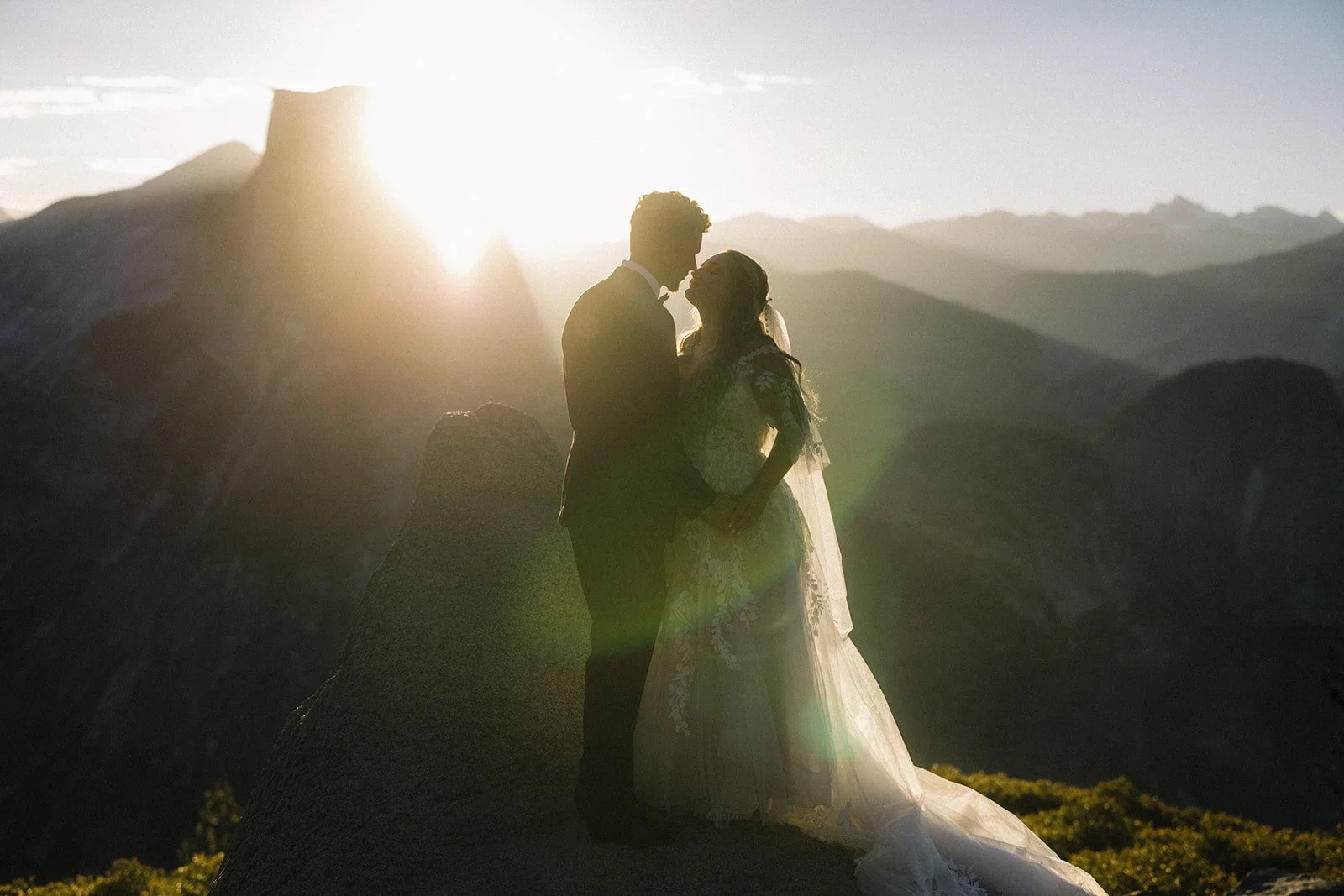
It was still dark when we arrived at Glacier Point.
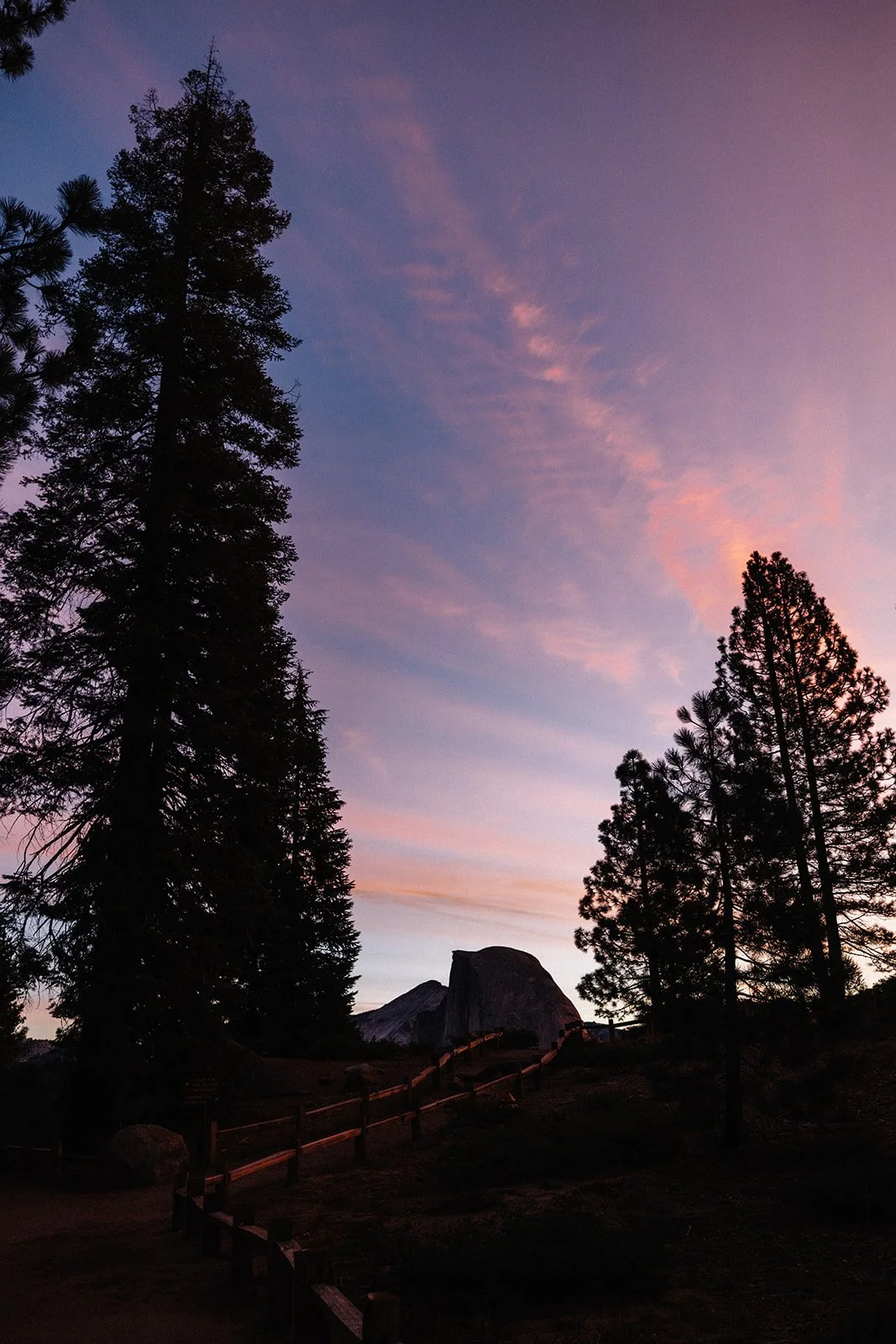
I got there first, the way I always do — checked the light, checked the wind, got everything in place. The groom arrived a few minutes later and just stood there at the railing, looking out over the valley. Half Dome in the distance. The sky just starting to go from black to deep blue.
He didn't say anything for a while. Then he started to get emotional — knowing what was about to happen, knowing she was on her way up the trail. I gave him space. That's not a moment you interrupt.
His words were something I won't repeat here. My allergies were acting up.
That's what eloping in Yosemite actually looks like. Not a wedding. Not a production. Just two people and a place that goes quiet around you — if you know how to find that quiet, and when.
This guide is about finding it.
The thing most couples get wrong
Every blog about eloping in Yosemite covers the locations. Most cover the permits. Almost none of them talk about timing in a way that's actually useful — and timing is everything.
Yosemite is one of the most visited national parks in the country. In peak season, Glacier Point parking fills by 7am. Taft Point lot fills around the same time. Tunnel View — the iconic valley overlook most couples picture when they think of Yosemite — can be standing room only before 8am in July and August.
If you're arriving at 9am expecting a quiet ceremony, you're not getting one.
The couples who have the day they actually came for are the ones who planned around the crowds before the crowds existed. That means being on the trail at first light. It means knowing which locations buy you more time. It means building a timeline the night before, not the morning of.
Here's how to do that.
Do you need a permit to elope in Yosemite?
Yes — any ceremony with two or more people inside Yosemite National Park requires a Special Use Permit issued by the NPS. This applies regardless of guest count, whether it's just the two of you or a small group.
The details:
Fee: $150
Applications go to the Yosemite NPS office
Submit at least 21 days before your date
Peak season (May–October): apply 8–12 months out
The permit designates a specific approved location
The park caps ceremonies at 60 per month during peak season. That sounds like a lot until you realize how many couples are trying to get the same dates. September weekends in particular go fast.
I handle the permit research and application for every couple I work with. But if you're planning independently, apply early and have a backup location in mind — not every spot gets approved for every date.
What you need legally to elope in Yosemite
Beyond the NPS permit, four things make your elopement legally binding:
A California marriage license. You can get one from any California county clerk's office — you don't need to be a California resident. It's valid for 90 days and can be used anywhere in the state. If you're traveling from out of state, apply before you arrive so it's one less thing to handle on the ground.
At least one witness. Someone present at the ceremony needs to sign the marriage certificate. That can be your photographer, a friend, or anyone over 18.
A licensed officiant. California requires an ordained officiant to perform and sign off on the ceremony. I recommend officiants who know the park and have performed ceremonies at the designated sites — I'll connect you as part of the planning process.
Both parties must be 18 or older.
The license and the permit are the two that need lead time. Start both at least 60 days before your date.
The best locations — and what no one tells you about each one
Glacier Point
What it is: A paved overlook 3,200 feet above the valley floor. Panoramic views of Half Dome, Yosemite Falls, and the high country. No significant hiking required — it's a short walk from the parking area.
What most guides don't say: May is one of the best months to be here. The crowds haven't arrived yet and some days you'll nearly have the point to yourself. That changes fast. By July the parking lot is full by 7 or 8am, and the overlook gets busy shortly after.
When to go: Arrive before sunrise during summer. In May you have more flexibility — but Tioga Road may still be closed, which affects access to other parts of the park. Glacier Point Road itself typically opens in late May.
Best for: Couples who want dramatic panoramic views without a long hike. Sunrise ceremonies. Anyone who wants Half Dome in the background.
Taft Point
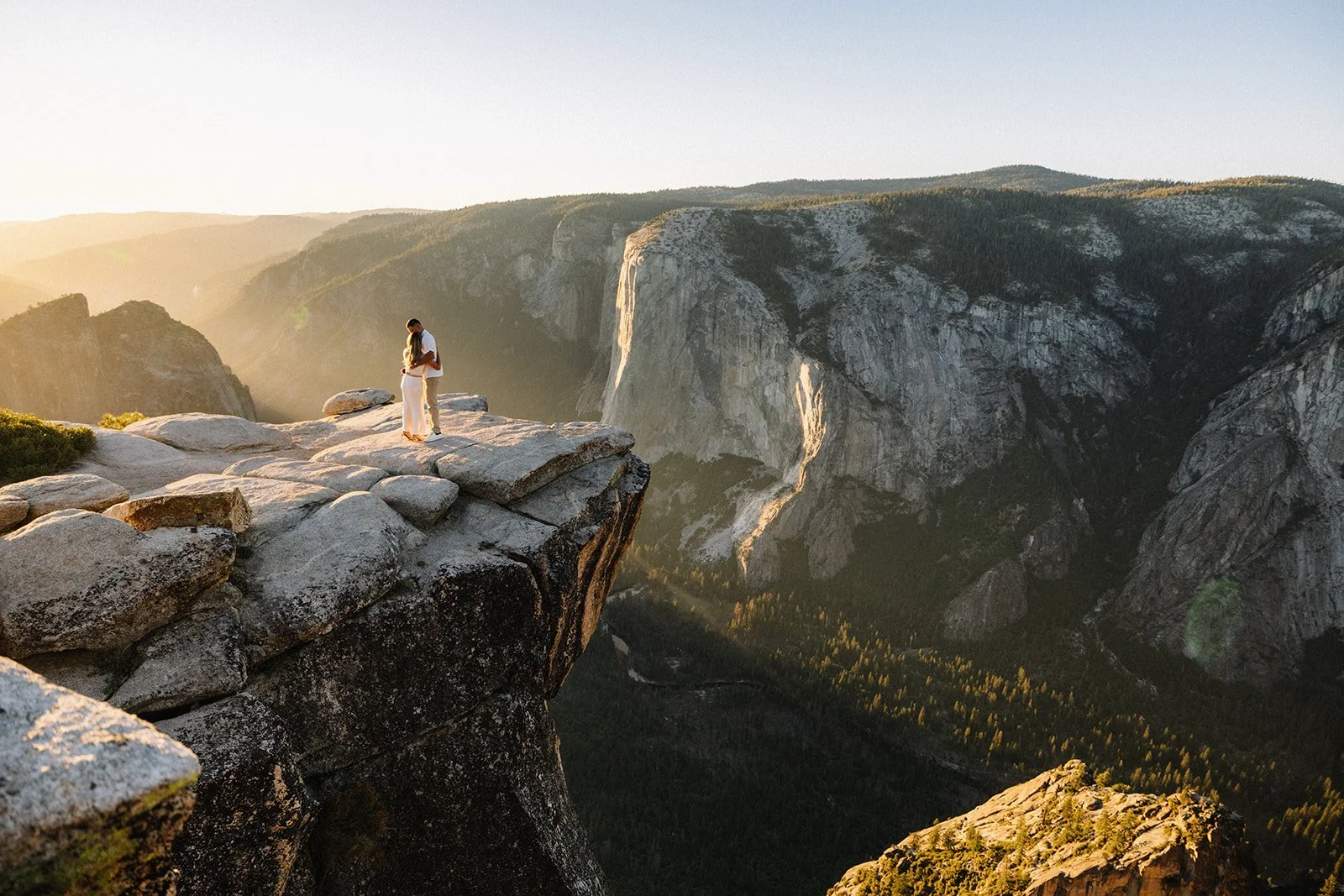
What it is: A 2.2-mile round-trip hike to a set of dramatic fissures on the valley rim. 3,000-foot drops. No railing at the edge. The kind of place that makes you feel small in the best way.
What most guides don't say: Taft is a sunset location — the light hits differently in the late afternoon and the views open up in a way they don't at sunrise. But sunset means crowds in summer. July and August get busy. If you're going in peak season, be prepared to share the rim.
The May detail: May is genuinely one of the best months for Taft — fewer people, wildflowers, and incredible snow on the high country. But there's a creek crossing on the trail that can run high with snowmelt. I always warn couples about this section and tell them to plan for it. Waterproof boots, or just accept that your feet might get wet. For most couples it ends up being part of the day — a small adventure before the main one. By June the creek is usually dry.
Parking: The Taft Point lot fills early in peak season — by 7 or 8am on busy days. If you're planning a sunset ceremony in July, you may need to park elsewhere and hike in.
Best for: Couples who want something dramatic and slightly off the beaten path. Sunset ceremonies. Anyone who doesn't mind a short hike.
Tunnel View
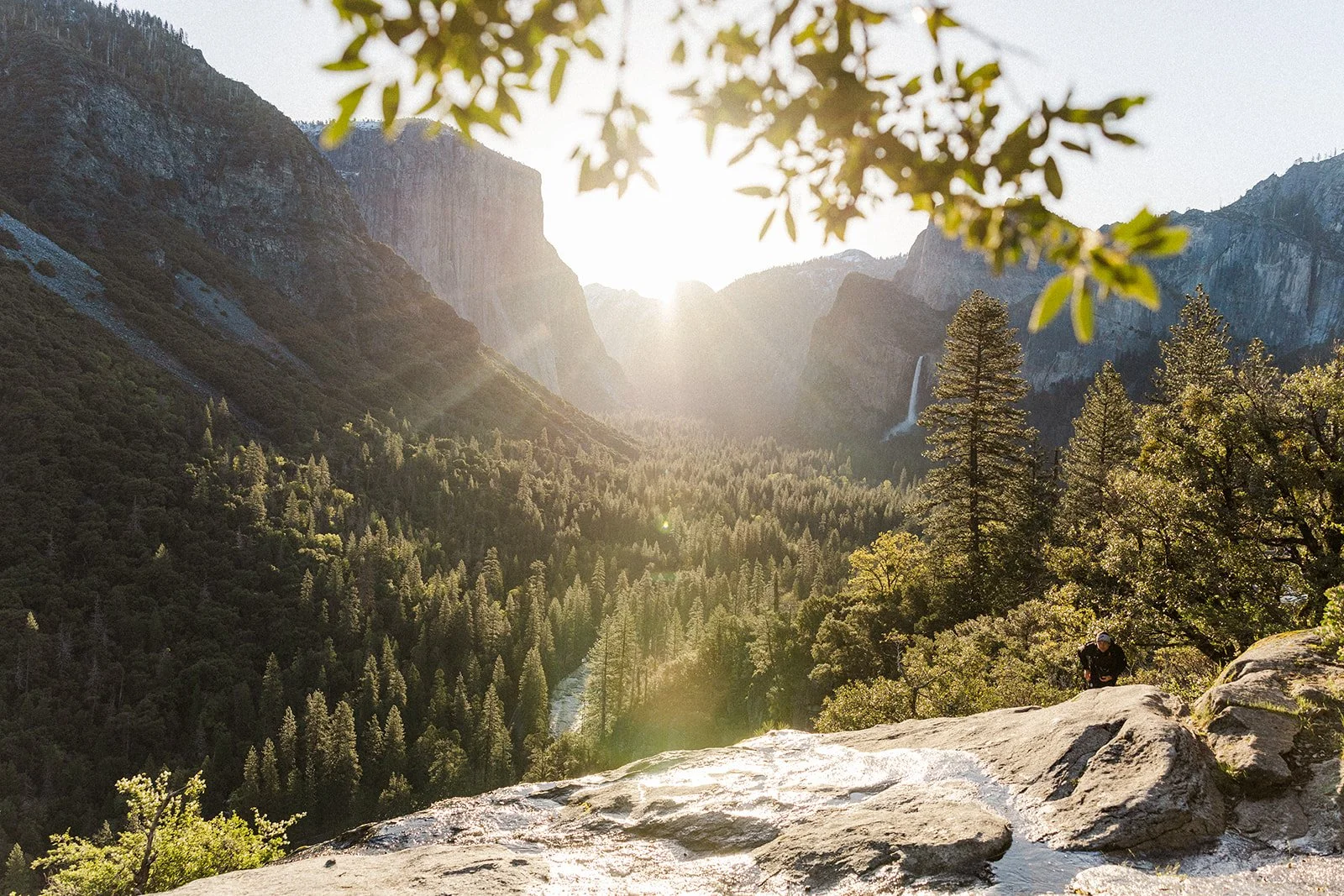
What it is: The classic Yosemite image — El Capitan on the left, Half Dome in the distance, Bridalveil Fall on the right. It's the view that made Yosemite famous. It's also one of the most photographed spots in the country.
What most guides don't say: You can absolutely have a quiet, uninterrupted ceremony here — but only if you arrive before the tourists do. During busy season that means being here before sunrise. By 7am it fills up. By mid-morning it's wall to wall.
The light at Tunnel View is genuinely extraordinary at first light. The valley catches the early morning glow in a way that's worth setting an alarm for.
Best for: Couples who want the iconic Yosemite view. Early risers. Sunrise ceremonies. Anyone who knows exactly what photo they're after and is willing to get there first.
Sentinel Dome
What it is: A 2.2-mile round-trip hike to a bare granite dome with 360-degree views of the park. Higher elevation than most valley-level spots. Less trafficked than Glacier Point or Tunnel View.
What most guides don't say: This is a quieter option than the more famous overlooks — and that quiet is real, especially on weekday mornings in shoulder season. The summit is exposed granite, which means wind and no shade, so weather matters more here than at other spots.
Best for: Couples who want elevation and a slightly more off-the-beaten path feel. Shoulder season. Anyone who wants 360-degree views without the Glacier Point crowd.
Valley View / El Capitan Meadow
What it is: Lower elevation valley locations with direct views of El Capitan and the Merced River. No significant hiking. Accessible year-round.
What most guides don't say: These locations are better than their reputation. Most couples overlook them in favor of the high overlooks — which means they're often less crowded, and the scale of El Capitan from the valley floor is something the overlooks can't give you. The river reflection at Valley View in the right light is worth building a morning around.
Best for: Couples with limited mobility. Winter elopements when higher elevation spots are inaccessible. Anyone who wants El Capitan close.
When to elope in Yosemite — month by month
April: Waterfalls at peak flow. Valley is green. Crowds are building but haven't peaked. Higher elevation roads still closed. A good window if you want the valley in full bloom.
May: One of the best months. Glacier Point Road opens late May. Wildflowers on the high trails. Fewer crowds than summer. The creek crossing at Taft can still run high — plan for it. Light is long and warm.
June: Tioga Road reopens (usually). All locations accessible. Crowds start building noticeably. Waterfalls begin to slow. Still a strong month if you time it right.
July – August: Peak season. The valley is at full capacity most days. Parking lots fill by 7am at major overlooks. Plan sunrise arrivals or accept sharing the space. The light is still good — you just have to get there first.
A note on timed entry reservations.
Yosemite has used timed entry reservation systems during peak season in recent years — typically mid-spring through late summer, requiring advance reservations to drive into the park during certain hours. The rules change annually. Before you finalize any summer or spring date, check the current year's timed entry requirements at nps.gov/yose. Your NPS Special Use Permit covers your ceremony — it doesn't bypass the timed entry window. I walk every couple through this as part of the planning process so nothing falls through at the last minute.
September: The single best month for most couples. Crowds drop noticeably after Labor Day. Golden light. Cooler temperatures. Fall color begins in the high country. Permits are easier to get than summer. This is the month I recommend most.
October: Golden hour light is extraordinary. Fewer crowds. Some higher elevation roads begin closing late in the month. A strong choice if September isn't available.
November – March: Winter in the valley. Snow-covered granite. Near-empty trails. Tioga Road closed. Some days are crystalline and cold and impossibly beautiful. Requires flexibility around weather and road conditions — worth it for the right couple.
The thing about how fast the day goes
This is the part couples tell me they wish someone had said out loud before their day arrived.
Yosemite is large. The locations you want to see are spread across the park. The drive between them takes longer than Google Maps suggests once you factor in parking, the walk from the lot, and the time it takes to actually arrive somewhere and let it land.
And here's the thing about standing at a 3,000-foot overlook — time does something strange. It seems to stop. You're taking it all in, the scale of it, the quiet, the fact that you're actually here doing this. And then somehow it's an hour later.
The day goes fast. Not because anything goes wrong — because everything goes right, and you're so inside of it that the clock stops mattering until suddenly it does.
Every timeline I build for my couples includes a block of time that isn't on the schedule. Time to breathe. Time to just be in it together. Not moving to the next location, not thinking about the shot, just the two of you in the place you came for.
That's not extra time. That's the whole point of the day.
A note on lodging
Where you stay affects your timeline more than most couples expect. In-park lodges — Yosemite Valley Lodge, The Ahwahnee — put you minutes from the valley floor and mean early morning arrivals are actually possible without a 4am alarm. They also book out months in advance, sometimes a year out for peak dates.
Outside the park, El Portal is the closest — about 15 minutes to the valley. Mariposa and Groveland are further but give you more options.
I give every couple a breakdown of what's close and what's further, and I build the drive time into the day's timeline. Where you stay should match how early you need to be at your location. If you're planning a sunrise ceremony at Glacier Point and you're staying in Mariposa, the alarm is going off at 3:30am. That's not a problem — it's just information you need before you book the room.
What a Yosemite elopement actually costs
Most couples I work with want a straight answer on this, so here it is.
The NPS Special Use Permit is $150, paid directly to the park. A California marriage license runs $35–$100 depending on the county. A licensed officiant typically costs $200–$500. Photography with AJ Photography starts at $4,500 and includes full planning, permit handling, and complete photo and video coverage. Lodging in or near the park ranges from $200–$600 per night depending on how close you want to be.
All in, most couples budget $7,000–$12,000 for a well-planned Yosemite elopement. That's not a small number — but it's also the whole day, not a line item in a larger wedding budget. No venue fee. No catering minimum. No florals for 20 tables. Just the two of you, the park, and everything that actually matters.
If you want to talk through what your specific day might look like and cost, that's exactly what the first conversation is for.
What to do next
If you're planning a Yosemite elopement and want someone who's handled the permits, knows the timing, and will build your day around the light — not around a standard timeline — I'd love to hear about it.
I handle every permit, every logistic, and every detail between now and your day. You show up. I take care of the rest.